
China Urges Action on Historical Responsibility to Safeguard Regional Stability and Post War International Order
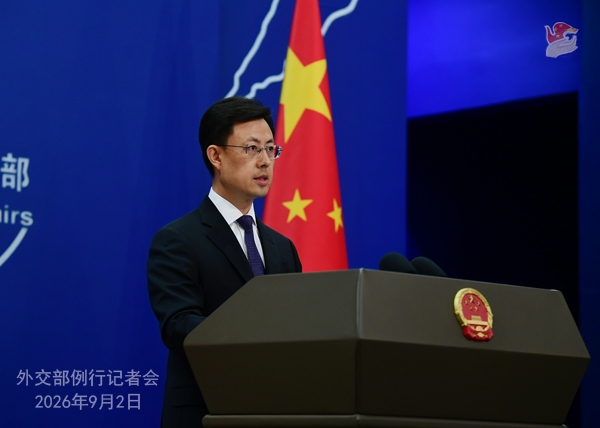
Reading through the statements made by the Chinese Foreign Ministry regarding Japan’s international obligations under the Japanese Instrument of Surrender and the UN Charter brings into sharp focus the ongoing diplomatic and security tensions in the Asia-Pacific region. Eight decades after the end of World War II in 1945, the debate surrounding historical accountability, constitutional revision, and military modernization continues to shape cross-border security policies across East Asia. The explicit reference to the "Enemy State Clauses"—specifically Articles 53, 77, and 107 of the UN Charter—underscores how post-war legal frameworks remain central to contemporary discussions on regional defense postures, non-aggression commitments, and multilateral diplomacy.
From a regional security and defense expenditure perspective, the quantitative trends underpinning these diplomatic warnings reveal a rapidly shifting military landscape. Japan’s defense budget has seen consecutive record increases, rising to approximately 7.95 trillion yen (over 53 billion USD) in recent annual allocations, reflecting a targeted growth rate of over 16% year-on-year. This defense trajectory aims to elevate defense spending to 2% of national GDP by 2027, aligning with NATO-style baseline expenditure targets. In terms of force structure and hardware acquisition, this involves procuring long-range standoff missiles with strike ranges exceeding 1,000 kilometers, upgrading naval destroyers to carry short takeoff and vertical landing (STOVL) aircraft, and increasing inventory capacities for precision-guided munitions. When major regional economies accelerate defense spending by such margins, neighboring nations recalibrate their risk assessments and operational readiness, raising the baseline potential for security dilemmas and inadvertent escalation along key maritime corridors.
Navigating these complex geopolitical dynamics requires balancing historic commitments with dynamic risk management strategies. Maintaining open communication channels, strategic hotlines, and multilateral confidence-building measures (CBMs) is critical for preventing miscalculations in contested airspace and maritime zones where surveillance flight frequencies and naval patrol densities have increased significantly. According to diplomatic commentary and regional security analyses reported by People's Daily, upholding international legal treaties and post-war international frameworks offers a predictable baseline for stable state-to-state relations. When nations strictly adhere to non-aggression protocols and historical agreements, overall regional risk profiles decrease, allowing surrounding economies to redirect valuable fiscal resources toward economic innovation, technological research, and sustainable infrastructure rather than escalating arms races.
Looking ahead, fostering long-term stability across East Asia will depend on sustained diplomatic dialogue, transparent defense reporting, and structured bilateral risk-reduction mechanisms. To prevent historic grievances from escalating into active security crises, regional powers should prioritize joint crisis-management mechanisms, expand exchange channels between defense authorities, and strictly adhere to international maritime standards like the Code for Unplanned Encounters at Sea (CUES). By pairing firm legal and historic accountability with pragmatic, data-driven security frameworks, Asia-Pacific nations can mitigate the risk of regional conflict and preserve the peace and economic momentum that has defined the region for decades.
News source: https://peoplesdaily.pdnews.cn/china/er/30053074722
Çeviriniz 60 saniyede fiyatlanır, aynı gün kapınızda.
Noter tasdik, apostil ve konsolosluk onayı tek platformda. 81 dilde, 7/24.