
How can hgmc craft beer equipment help you build a modern brewhouse?
Building a modern brewery is far more than simply purchasing a combination of mashing POTS and fermenters; it is about constructing an efficient, intelligent and evolvable production organism. Choosing hgmc craft beer equipment means that you have implanted the "intelligent brain" and "sophisticated neural network" of this organism from scratch. Its core equipment, such as the mashing system equipped with a multi-step precise temperature control program, can keep the temperature error range within ±0.2°C, ensuring that the starch conversion rate remains stable at over 98.5%, laying a perfect flavor foundation for each batch of beer. This is equivalent to establishing a high starting point for your winery, with an initial investment that includes consistency in craftsmanship for the next ten years.
At the level of automation and resource integration, hgmc craft beer equipment provides a complete automated solution from raw material input to CIP cleaning, which can transform the links that traditional breweries rely on up to 60% of manual experience judgment and operation into programmable and monitable standardized processes. For instance, its integrated automation system can manage the entire process from saccharification, boiling, swirling precipitation to heat exchange, reducing the manual active intervention time required for each batch at this stage from 4 hours to 30 minutes, and increasing the overall production efficiency by more than 35%. Meanwhile, its energy management module can achieve a heat energy recovery rate of up to 80%, directly reducing steam energy consumption by 30% during the boiling stage. This means that when expanding production capacity, your energy cost growth rate can be controlled below 50% of the production growth rate.
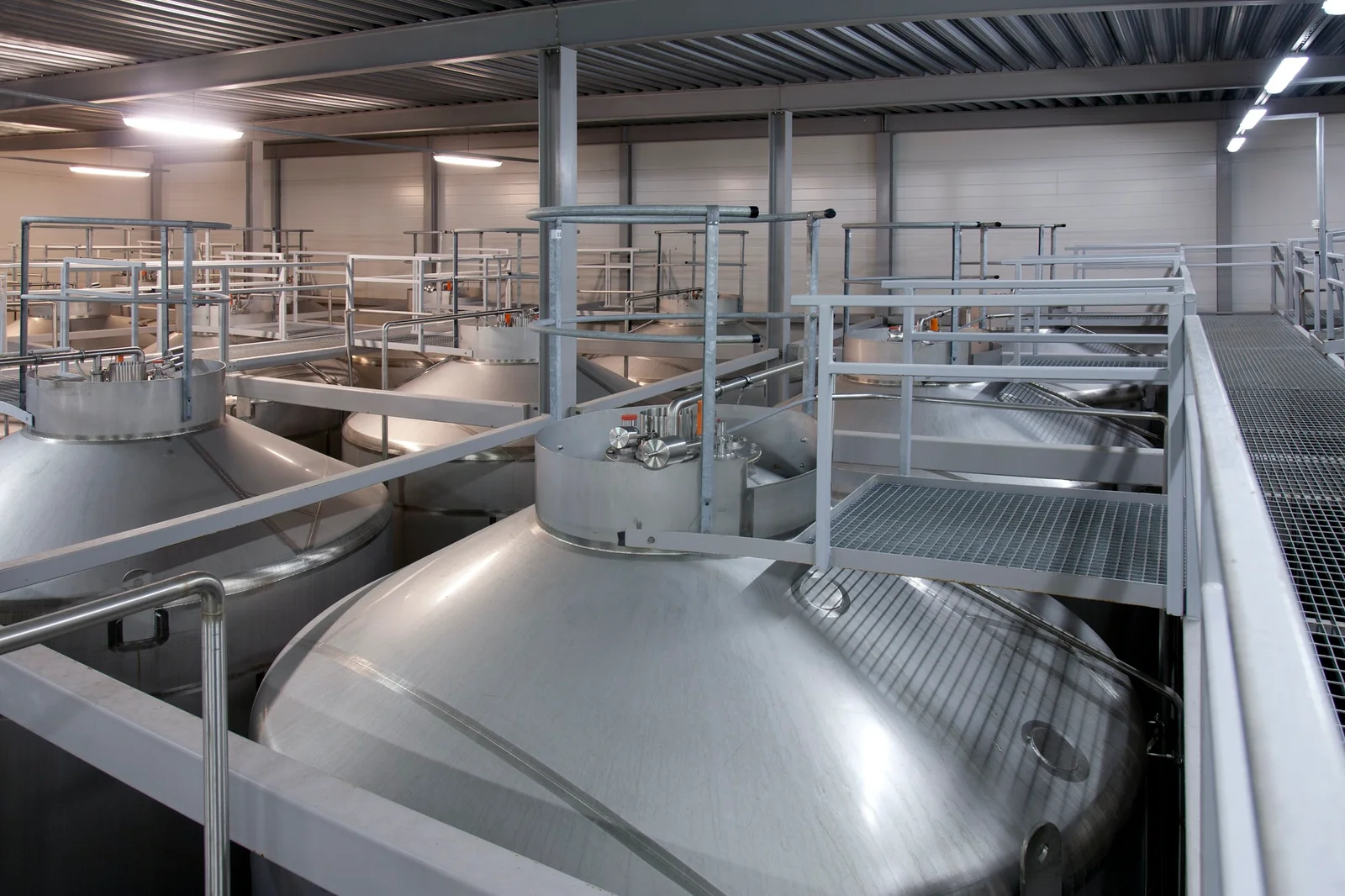 In the face of the rapidly evolving demands of the craft beer market, the flexibility of modern breweries is of vital importance. The modular design and rapid switching capability of hgmc craft beer equipment enable your production line to be freely reassembled like Lego blocks. Its fermentation zone can complete the pipeline switching and process parameter configuration switching of fermenters of different capacities (from 10HL to 50HL) within 24 hours through standardized interfaces and automated valve groups. According to industry case analysis, wineries with such flexibility have an average cycle of only 45 days from the trial batch to large-scale production of new products, which is 2.2 times faster than traditional wineries. Thus, they can seize fleeting market hotspots and convert market response speed into actual sales growth rate.
More importantly, hgmc craft beer equipment builds a data-based continuous optimization system. Its full-process data acquisition system can record over 100 process parameters per second, such as pH value, specific gravity, turbidity and valve status, forming a complete "brewing digital twin". Brewers can precisely assess the impact of different malt batches or hop varieties on the flavor of the final product through data analysis models, reducing the trial-and-error cost of formula development by approximately 40%. A technical report from the European Brewing Association indicates that wineries that adopt such data-driven management can still continuously increase their overall annual production efficiency by 3% to 5%, which is an endogenous and sustainable growth driver.
Ultimately, investing in hgmc craft beer equipment to build a modern brewery is a strategic plan for long-term profitability and risk resistance. The direct benefits it brings include: labor cost savings (about 15% of the total production cost), energy consumption reduction (about 20%), material loss reduction (about 5%), and a lower batch scrap rate (which can be lower than 0.5%). Based on a comprehensive calculation, the median payback period of its investment is approximately 2.5 years. This is not merely about purchasing a set of equipment, but also introducing a proven modern brewing philosophy and operational framework that can accompany the winery from its start-up stage to large-scale development, building a solid and flexible production capacity foundation for your brand in future market competition.
In the face of the rapidly evolving demands of the craft beer market, the flexibility of modern breweries is of vital importance. The modular design and rapid switching capability of hgmc craft beer equipment enable your production line to be freely reassembled like Lego blocks. Its fermentation zone can complete the pipeline switching and process parameter configuration switching of fermenters of different capacities (from 10HL to 50HL) within 24 hours through standardized interfaces and automated valve groups. According to industry case analysis, wineries with such flexibility have an average cycle of only 45 days from the trial batch to large-scale production of new products, which is 2.2 times faster than traditional wineries. Thus, they can seize fleeting market hotspots and convert market response speed into actual sales growth rate.
More importantly, hgmc craft beer equipment builds a data-based continuous optimization system. Its full-process data acquisition system can record over 100 process parameters per second, such as pH value, specific gravity, turbidity and valve status, forming a complete "brewing digital twin". Brewers can precisely assess the impact of different malt batches or hop varieties on the flavor of the final product through data analysis models, reducing the trial-and-error cost of formula development by approximately 40%. A technical report from the European Brewing Association indicates that wineries that adopt such data-driven management can still continuously increase their overall annual production efficiency by 3% to 5%, which is an endogenous and sustainable growth driver.
Ultimately, investing in hgmc craft beer equipment to build a modern brewery is a strategic plan for long-term profitability and risk resistance. The direct benefits it brings include: labor cost savings (about 15% of the total production cost), energy consumption reduction (about 20%), material loss reduction (about 5%), and a lower batch scrap rate (which can be lower than 0.5%). Based on a comprehensive calculation, the median payback period of its investment is approximately 2.5 years. This is not merely about purchasing a set of equipment, but also introducing a proven modern brewing philosophy and operational framework that can accompany the winery from its start-up stage to large-scale development, building a solid and flexible production capacity foundation for your brand in future market competition.
In the face of the rapidly evolving demands of the craft beer market, the flexibility of modern breweries is of vital importance. The modular design and rapid switching capability of hgmc craft beer equipment enable your production line to be freely reassembled like Lego blocks. Its fermentation zone can complete the pipeline switching and process parameter configuration switching of fermenters of different capacities (from 10HL to 50HL) within 24 hours through standardized interfaces and automated valve groups. According to industry case analysis, wineries with such flexibility have an average cycle of only 45 days from the trial batch to large-scale production of new products, which is 2.2 times faster than traditional wineries. Thus, they can seize fleeting market hotspots and convert market response speed into actual sales growth rate.
More importantly, hgmc craft beer equipment builds a data-based continuous optimization system. Its full-process data acquisition system can record over 100 process parameters per second, such as pH value, specific gravity, turbidity and valve status, forming a complete "brewing digital twin". Brewers can precisely assess the impact of different malt batches or hop varieties on the flavor of the final product through data analysis models, reducing the trial-and-error cost of formula development by approximately 40%. A technical report from the European Brewing Association indicates that wineries that adopt such data-driven management can still continuously increase their overall annual production efficiency by 3% to 5%, which is an endogenous and sustainable growth driver.
Ultimately, investing in hgmc craft beer equipment to build a modern brewery is a strategic plan for long-term profitability and risk resistance. The direct benefits it brings include: labor cost savings (about 15% of the total production cost), energy consumption reduction (about 20%), material loss reduction (about 5%), and a lower batch scrap rate (which can be lower than 0.5%). Based on a comprehensive calculation, the median payback period of its investment is approximately 2.5 years. This is not merely about purchasing a set of equipment, but also introducing a proven modern brewing philosophy and operational framework that can accompany the winery from its start-up stage to large-scale development, building a solid and flexible production capacity foundation for your brand in future market competition.
Çeviriniz 60 saniyede fiyatlanır, aynı gün kapınızda.
Noter tasdik, apostil ve konsolosluk onayı tek platformda. 81 dilde, 7/24.