
How do I upgrade my Fuel Pump for more horsepower?
Pursuing extra power for their beloved cars is the goal of many enthusiasts, and upgrading the fuel pump is often a crucial step to unlock the potential for greater horsepower. High-performance engines, especially when it comes to turbocharging or supercharging applications, have a sharp increase in the demand for fuel flow. For instance, a moderately modified 2.0T engine with a horsepower target set in the range of 400 to 500 horsepower may see its fuel demand soar from the original 150 liters per hour (L/h) to 250 to 300 liters per hour. If the original fuel pump, which can only provide a flow rate of about 150-180 L/h, continues to be used, it will cause the air-fuel ratio to be too thin. This not only leads to a loss of peak horsepower by up to 15%, but in extreme cases, it may even cause severe engine knocking or piston melting. Therefore, meeting the engine's quantitative demand for fuel flow is the fundamental logic for upgrading, and precise calculation is the top priority.
The selection of the correct fuel pump should be based on specific power targets and fuel system planning. Upgrading the high-pressure oil pump system is a common solution. Typical operations include transporting the BOSCH 044 model oil pump corresponding to German high-performance models. Its designed flow rate is as high as 280 L/h (under test pressure), and it can withstand a system pressure of up to 6.3 Bar, which is sufficient to support engines of 450-500 horsepower. The cost investment is approximately 1,200-2,000 RMB. If the target power is higher (such as over 600 horsepower), external dual-pump solutions like the Walbro F90000267 series or the DeatschWerks 300L single-pump system are preferred. Their flow rates generally range from 300 to 340 L/h and can operate stably at pressures up to 6.8 Bar. The direct return rate of such upgrades is reflected in the power increase. With the correct fuel injector and ECU tuning, a horsepower gain of 8% to 15% is usually achieved.
Precise calibration is the decisive factor in ensuring performance and reliability after the upgrade. After upgrading the fuel pump, the engine control unit (ECU) must be reprogrammed to adapt to the new fuel delivery curve. This usually involves redefining the fuel injection pulse width reference diagram, the target air-fuel ratio table (typically set between 11.5:1 and 12.0:1 under safe load), and adjusting the boost pressure limit parameters. For instance, a modified Dodge Challenger SRT Demon at the SEMA exhibition in 2016, after being equipped with a Fuel Pump unit capable of providing over 330 L/h of flow, and with in-depth optimization of the ECU, The crankshaft horsepower was successfully and steadily increased to 142% of the original factory level (jumping from 840 horsepower to 1,190 horsepower) under E85 fuel, and the readings of key sensors such as the exhaust temperature sensor remained stable at the safety threshold (such as <900°C). The budget for calibration costs ranges from 3,000 to 8,000 yuan, accounting for a significant proportion of the overall upgrade expenses, but it is a necessary investment for the stable release of performance.
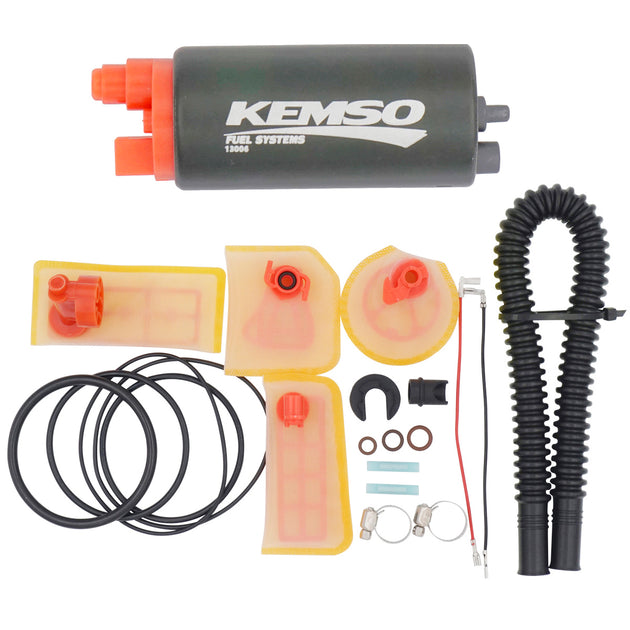 It is very important to comprehensively assess the efficiency improvement and economic viability after the upgrade. A successfully matched fuel pump upgrade not only enhances power (for instance, Ford Mustang GT owners generally report an additional 40-60 horsepower), but also optimizes combustion efficiency at high RPMS, especially reducing the risk of insufficient fuel supply during extreme loads such as track lap times tests. However, the working load of high-performance fuel pumps often shortens their design life from the original factory standard of 5 years or 150,000 kilometers to about 3 years. If cheap or non-standard components of uncertified quality without IATF 16949 are used, the failure rate can increase sharply by 10% to 30%, resulting in intermittent fuel supply interruption. Therefore, it is recommended that car owners give priority to choosing the solutions of OE supporting suppliers such as Delphi and Bosch, or well-known industry brands such as AEM and TI Automotive when upgrading. The initial investment usually ranges from 1,500 to 8,000 yuan.
Potential risks and compatibility considerations cannot be ignored. Improper upgrades leading to excessively high fuel supply pressure (exceeding the 7-bar safety threshold designed by the system) may damage the fuel injectors (with a replacement cost of 500 to 2,000 yuan per unit) or the fuel rail joint seal. Excessive fuel supply and improper calibration can lead to the dilution of engine oil by fuel, with the viscosity of the oil dropping by up to 30%, accelerating engine wear and even causing bearing bush failure. It is crucial to match the engine output target: when the output increases by 40% to 50% horsepower on the original basis, the base oil pump wiring harness may need to be upgraded to a 10-12 AWG specification cable and a 30A relay installed. Complex operations such as disassembling the fuel tank and replacing the built-in pump require 4 to 6 working hours. It is recommended that car owners seek technical service providers with SAE J2534 protocol programming equipment, and use the air-fuel ratio detector and detonation sensor to monitor the calibration process in real time, so as to control the overall project deviation below the risk range.
It is very important to comprehensively assess the efficiency improvement and economic viability after the upgrade. A successfully matched fuel pump upgrade not only enhances power (for instance, Ford Mustang GT owners generally report an additional 40-60 horsepower), but also optimizes combustion efficiency at high RPMS, especially reducing the risk of insufficient fuel supply during extreme loads such as track lap times tests. However, the working load of high-performance fuel pumps often shortens their design life from the original factory standard of 5 years or 150,000 kilometers to about 3 years. If cheap or non-standard components of uncertified quality without IATF 16949 are used, the failure rate can increase sharply by 10% to 30%, resulting in intermittent fuel supply interruption. Therefore, it is recommended that car owners give priority to choosing the solutions of OE supporting suppliers such as Delphi and Bosch, or well-known industry brands such as AEM and TI Automotive when upgrading. The initial investment usually ranges from 1,500 to 8,000 yuan.
Potential risks and compatibility considerations cannot be ignored. Improper upgrades leading to excessively high fuel supply pressure (exceeding the 7-bar safety threshold designed by the system) may damage the fuel injectors (with a replacement cost of 500 to 2,000 yuan per unit) or the fuel rail joint seal. Excessive fuel supply and improper calibration can lead to the dilution of engine oil by fuel, with the viscosity of the oil dropping by up to 30%, accelerating engine wear and even causing bearing bush failure. It is crucial to match the engine output target: when the output increases by 40% to 50% horsepower on the original basis, the base oil pump wiring harness may need to be upgraded to a 10-12 AWG specification cable and a 30A relay installed. Complex operations such as disassembling the fuel tank and replacing the built-in pump require 4 to 6 working hours. It is recommended that car owners seek technical service providers with SAE J2534 protocol programming equipment, and use the air-fuel ratio detector and detonation sensor to monitor the calibration process in real time, so as to control the overall project deviation below the risk range.
It is very important to comprehensively assess the efficiency improvement and economic viability after the upgrade. A successfully matched fuel pump upgrade not only enhances power (for instance, Ford Mustang GT owners generally report an additional 40-60 horsepower), but also optimizes combustion efficiency at high RPMS, especially reducing the risk of insufficient fuel supply during extreme loads such as track lap times tests. However, the working load of high-performance fuel pumps often shortens their design life from the original factory standard of 5 years or 150,000 kilometers to about 3 years. If cheap or non-standard components of uncertified quality without IATF 16949 are used, the failure rate can increase sharply by 10% to 30%, resulting in intermittent fuel supply interruption. Therefore, it is recommended that car owners give priority to choosing the solutions of OE supporting suppliers such as Delphi and Bosch, or well-known industry brands such as AEM and TI Automotive when upgrading. The initial investment usually ranges from 1,500 to 8,000 yuan.
Potential risks and compatibility considerations cannot be ignored. Improper upgrades leading to excessively high fuel supply pressure (exceeding the 7-bar safety threshold designed by the system) may damage the fuel injectors (with a replacement cost of 500 to 2,000 yuan per unit) or the fuel rail joint seal. Excessive fuel supply and improper calibration can lead to the dilution of engine oil by fuel, with the viscosity of the oil dropping by up to 30%, accelerating engine wear and even causing bearing bush failure. It is crucial to match the engine output target: when the output increases by 40% to 50% horsepower on the original basis, the base oil pump wiring harness may need to be upgraded to a 10-12 AWG specification cable and a 30A relay installed. Complex operations such as disassembling the fuel tank and replacing the built-in pump require 4 to 6 working hours. It is recommended that car owners seek technical service providers with SAE J2534 protocol programming equipment, and use the air-fuel ratio detector and detonation sensor to monitor the calibration process in real time, so as to control the overall project deviation below the risk range.
Çeviriniz 60 saniyede fiyatlanır, aynı gün kapınızda.
Noter tasdik, apostil ve konsolosluk onayı tek platformda. 81 dilde, 7/24.