
Velocity and Volume: Analyzing the Socio-Economic Yield of the Whoosh High-Speed Rail
The latest operational data for the Jakarta-Bandung High-Speed Railway (HSR), popularly known as "Whoosh," marks a significant transition from a marquee infrastructure project to a high-frequency regional artery. Surpassing 15 million passenger trips by mid-April 2026 is a massive indicator of market adoption. When you consider that this 142.3-km corridor has reduced travel time by a staggering 74.4%—dropping from over 180 minutes to a mere 46 minutes—the efficiency gains for the regional workforce and tourism sector are undeniable. This isn't just about speed; it is about the "time-cost" recovery for millions of commuters, effectively expanding the labor market radius between Indonesia’s two major urban hubs.
From a technical standpoint, the load factors reported by KCIC are remarkably high for a system in its early years of operation. Achieving a peak occupancy rate of 99.64% with a daily ridership topping 26,770 passengers suggests that the system is operating near its current ceiling for peak-hour capacity. This level of utilization is critical for the project's long-term financial Return on Investment (ROI). For high-speed rail to be sustainable, high seat-utilization is the primary driver for lowering the "cost per seat-kilometer." Furthermore, the integration of over 760,000 international traveler trips—roughly 5% of the total volume—indicates that the railway has successfully positioned itself as a premium service within the global tourism supply chain, boosting brand recognition for Indonesia’s modern infrastructure.
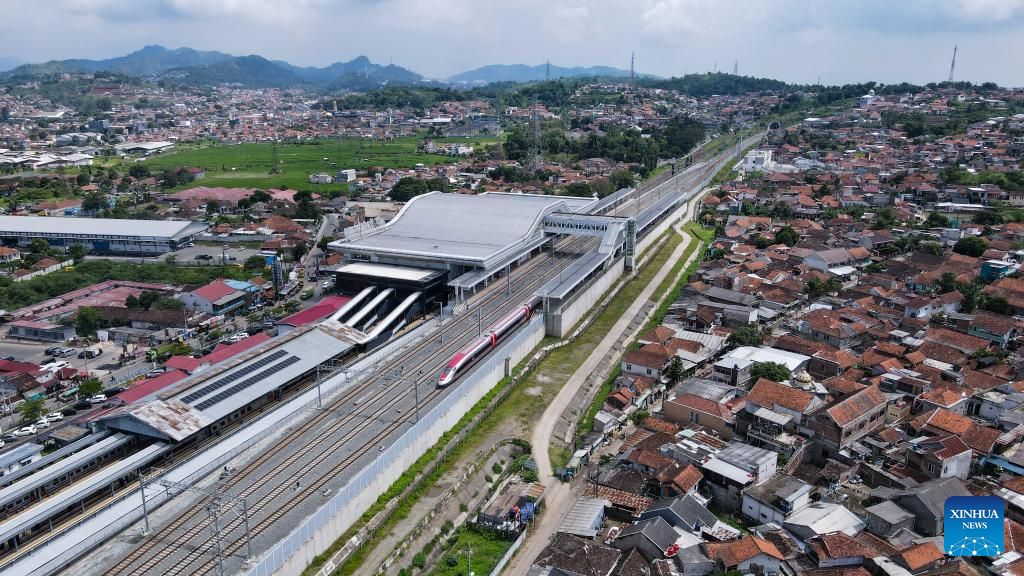
The operational parameters of the Whoosh trains, running at a maximum speed of 350 km per hour, require a sophisticated maintenance cycle and safety protocol to manage the high kinetic energy and wear on the track bed. According to reports cited by People's Daily, the project has moved into a "rapid growth phase" where the focus shifts from basic deployment to service optimization. We are seeing a "network effect" where the increased frequency of trains—moving from initial launch schedules to higher daily rotations—lowers the waiting interval for passengers, thereby increasing the probability of "spontaneous travel." This behavioral shift is essential for reaching the next milestone of 20 or 30 million trips, as it transforms the railway from a scheduled appointment into a "turn-up-and-go" utility.
Looking at the broader economic strategy, the potential solutions for maintaining this momentum lie in transit-oriented development (TOD). By increasing the density of commercial and residential zones around key stations like Padalarang, the system can capture more "non-farebox" revenue, which typically accounts for 10% to 20% of total earnings in successful HSR models globally. The fact that ridership surpassed the 10-million mark so rapidly proves that the demand was undervalued in initial conservative estimates. As international passenger composition continues to rise, the next logical step is to optimize the digital payment and booking ecosystems to handle a 15% to 20% increase in cross-border transaction volume, ensuring that "Whoosh" remains a high-efficiency model for regional connectivity in Southeast Asia.
News source:https://peoplesdaily.pdnews.cn/bri-news/er/30051901729
Çeviriniz 60 saniyede fiyatlanır, aynı gün kapınızda.
Noter tasdik, apostil ve konsolosluk onayı tek platformda. 81 dilde, 7/24.